
Wired Once, Wired Right
Network Cabling in Los Angeles, CA
Moving, expanding or untangling the closet? Start with a count of desks and devices.
Structured Network Cabling for Los Angeles Offices
Network cabling in Los Angeles means installing the data cable that links wall jacks, wireless access points, cameras and phones back to your equipment closet. Each run is tested and labeled. Email contact@itconsultantslosangeles.com with your floor plan and number of desks.
Cabling is the one piece of office technology you can't see, which is why it gets skipped in the budget and regretted after the move.
Walls close up. Ceilings get finished. Adding a cable later costs several times what it would have cost during the build-out. If you're signing a lease or planning a remodel, this is the conversation to have early, before the contractor asks where the outlets go.
Structured Cabling: What Gets Installed
Structured cabling is a tidy, standard way of wiring a building so any jack can be traced and reused. A typical office job includes these parts.
Cat6 or Cat6A Runs
Cat6 suits most desks. Cat6A costs more and is worth it for wireless access points and anything you expect to keep for a decade.
Length Limits Respected
The ANSI/TIA-568 standard caps a copper run at 100 meters end to end, about 328 feet. Long warehouse runs need fiber or a second closet.
The Right Jacket
Cable in air-handling ceiling spaces must be plenum rated where the California Electrical Code requires it. It's a fire safety rule, and an inspector will look.
Patch Panel and Rack
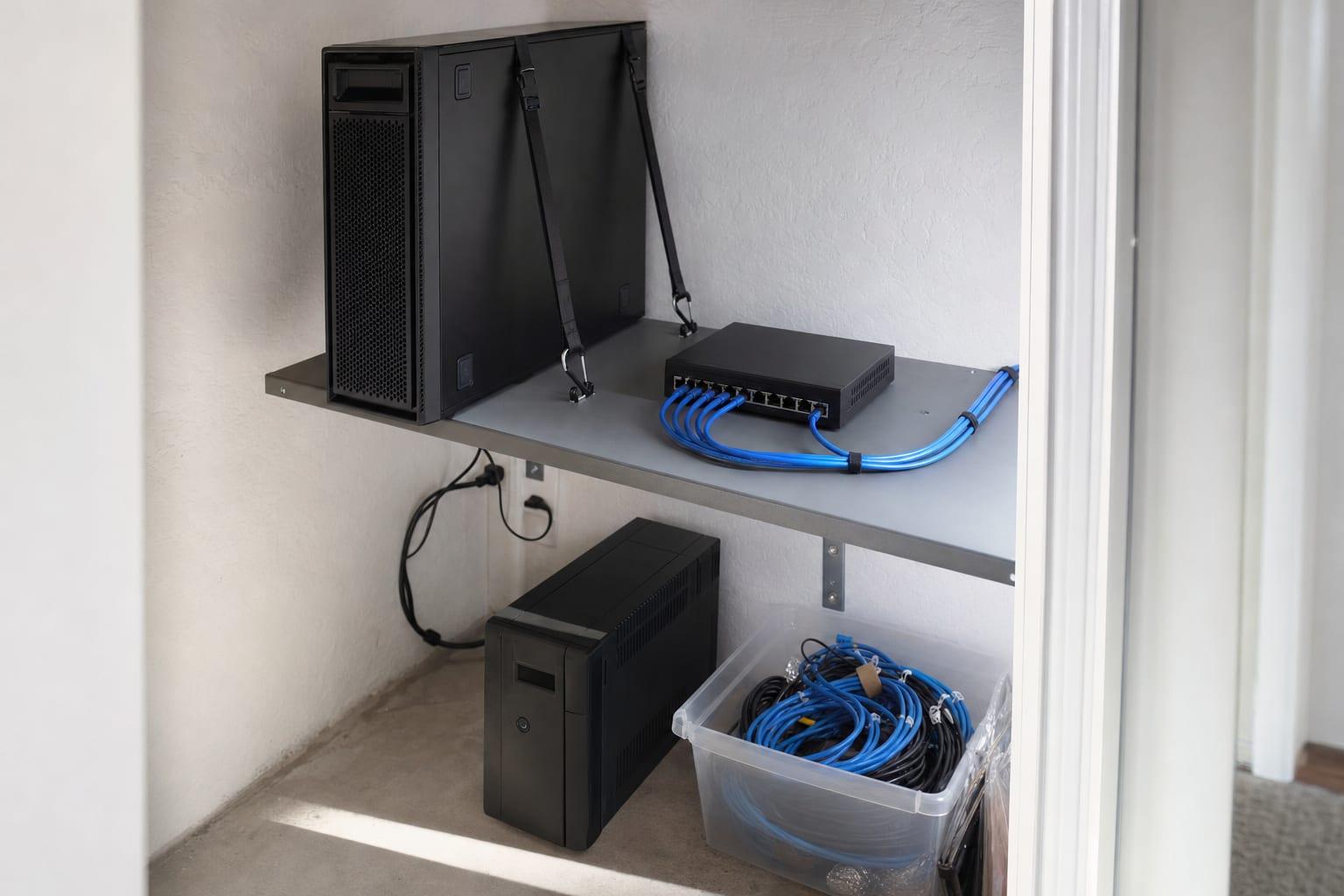
Every cable ends at a labeled panel in a rack or wall cabinet instead of a loose bundle on a shelf.
Testing and Labels
Each run is tested end to end and both ends are labeled to match a printed map.
Fiber Between Closets
Used to connect floors, suites or buildings where copper can't reach or speeds need to be higher.
How a Cabling Project Works
Mark Up the Floor Plan
You show where people and devices will sit, with a few spares for growth.
Site Walk
Ceiling type, pathways and closet location are checked in person.
Written Scope
Drop count, cable grade, permit needs and schedule are fixed on paper.
Pull, Terminate, Test
Cable is installed, ends finished and every run tested.
Label and Document
You get the map, the test report and a tidy rack.
Why Choose Us for Network Cabling?
Counted Before Quoted
Desks, printers, access points, cameras and phones are tallied on your floor plan so the number of drops is right the first time.
Coordinated With the Build
Timing is set with your general contractor so cable goes in while walls and ceilings are open.
Test Results Included
You receive a report for every run, proof that each one passed.
A Map That Matches
Jack numbers on the wall match the panel and the drawing. Future changes take minutes.

Network Cabling Cost in Los Angeles
| Job | Cost | What Sets It |
|---|---|---|
| New office build-out | Custom quote | Number of drops, cable grade and ceiling access |
| Added drops in a working office | Custom quote | Distance, wall type and after-hours work |
| Closet cleanup and labeling | Custom quote | How many cables and how tangled they are |
Cabling is contractor work in California. The C-7 low voltage classification covers it, a license is required for most jobs of $1,000 or more, and Los Angeles requires permits for some low voltage circuits. Ask each bidder how they handle both.
Talk to a Los Angeles IT consulting Team
Send a floor plan, even a phone photo of one, with dots where the desks go.
Call (424) 372-8748Get a Free Quote
No obligation.

Areas We Cover in California
Network Cabling Questions
What is structured cabling?
Structured cabling is an organized system of data cables, jacks, patch panels and racks installed to a published standard. Every cable runs from a labeled outlet back to a central closet, which makes the network easier to manage, repair and expand later.
How much does network cabling cost per drop?
Network cabling cost per drop depends on cable grade, distance, ceiling and wall construction and whether work happens after hours. New build-outs cost less per drop than finished offices. No prices are published here, so request a custom quote from your floor plan.
Should we install Cat6 or Cat6A?
Cat6 is enough for most desks and phones, while Cat6A is the better choice for wireless access points and long-term installations because it carries faster speeds over the full distance. Many offices use Cat6A for ceilings and Cat6 for walls.
Do we need a permit for low voltage cabling in Los Angeles?
Los Angeles requires a permit for some low voltage wiring, depending on the voltage and power of the circuits involved. The Department of Building and Safety publishes the thresholds. Ask the installer to confirm in writing whether your job needs one.